Historical Novel Society Conference presenter Alison McMahan pre-conference Interview

alison-mcmahanIt is my pleasure to introduce  Alison McMahan a filmmaker and president of Homunculus Productions, LLC and author. She is co-presenting a session on book trailers at the 2013 Historical Novel Society Conference in St. Petersburg, Florida. She has published two non-fiction books, the award-winning book Alice Guy Blaché, Lost Cinematic Visionary (Continuum 2002) (translated to Spanish and optioned for a film) and The Films Of Tim Burton: Animating Live Action In Hollywood (Continuum 2005).  She has just completed her first historical novel, The Road to Santiago, set in tenth-century Spain and on the First Crusade.

I am looking forward to Alison’s  HNS Conference presentation on book trailers, something every author can benefit by: How to best promote our works through video!

Q: What got you first interested in historical fiction?

I always loved reading historical fiction. As a teenager I preferred YA historicals like The Witch of Blackbird Pond and The Door In the Wall.  The first adult novel I read was Georgette Heyer’s Beauvallet. From there I went to T.H. White’s Once and Future King, Mary Renault, Daphne  Du Maurier, Mary Stewart, and more recently, Sharon Kay Penman, Diana Gabaldon,  Guy Gavriel Kay, Anne Perry, and Cecelia Holland. I’m particularly fond of stories set in the middle ages, but I also like Victorian literature and sci-fi, and steampunk and gaslight mysteries.

Q: How do you find the people and topics of your books?

Usually I first get inspired by a place and a time, such as the pilgrimage trail to Santiago in the 10th century or St. Louis in the 19th, and develop a story for that milieu. I like tying together historical trends and current politics; I was inspired to write about a Moorish convert to Christianity who becomes a spy for Raymond de Toulouse on the First Crusade after the U.S. invaded Iraq.

Q: Do you follow a specific writing and/or research process?

Because I grew up in Spain a lot of my writing has something to do with Latin culture. Also, I’m a filmmaker, and that means I have to travel a lot. Often just walking through a place like Cordoba in Spain will make me want to write a story that is set there. Then I do some research until I figure out what kind of story it might be. I probably do too much research, because I really enjoy that phase, especially if it involves looking at art. Right now I’m writing a series of short stories featuring automata in 16th century Spain. The first one is set in Lerma (near Burgos), the second on in Toledo, and the third will be set in Malaga. Walking through a place like the Duke of Lerma’s palace in Lerma, which is now a hotel, gave me this creepy feeling. I did some research and found out that the Duke of Lerma was responsible for the exile and genocide of hundreds of thousands of Moriscos in 1610. That tied in to the novel I just finished so I decided to write a story about that. The challenge is to write about historical figures but still make them into living, breathing genocidists that can still fall in love with an automaton.

Q: For you, what is the line between fiction and fact?

I’m a film historian; my book on the first woman filmmaker, Alice Guy Blaché, Lost Cinematic Visionary (Continuum 2002), put her back in the history books after she had been unjustly forgotten. That was a ten-year odyssey. There was a lot of resistance to my discoveries from male film scholars which meant that I had to be as precise as possible about everything I published. As a result I’m a real stickler for research and precision.

In Santiago, the lead characters are “little people,” a peasant, his children, a squire, the daughter of a Moorish merchant. They interact with characters like Raymond de Toulouse and the Emperor Alexius of Constantinople. I do my best to base those scenes on historical sources. I also research technologies, food, and religious practices. It’s important to be accurate with world building, even while spinning a romance or an epic adventure.

Q: Do you have an anecdote about a reading or fan interaction you’d like to share?

Before I published my book about Alice Guy Blaché, I gave a talk at a film festival in France.  There was a woman there, Joan Simon, who was also considering writing about Alice Guy, but after hearing my talk she introduced herself to me and became a big supporter of my research. She fought avidly to preserve many Alice Guy films that I had identified and curated a retrospective of Alice Guy’s work at the Whitney Museum in the winter of 2009, a huge accomplishment. It just shows the impact a single reading can have, even if only one person really hears you.

Q: Where do you feel historical fiction is headed as a genre?

Right now it seems that historicals exist mainly as hybrids: historical romances, historical mysteries, historical sci-fi forms like steampunk. I love all of those genres. I’m a big fan of alternative history. But I think that “straight” historicals might be poised for a comeback, because of the complexity of our political situations. Historicals are still popular with the young adult readers. They are  going to want to keep reading historicals as they grow up. However, TV series seem to be filling some of that need, so it’s hard to say.

Q: Is there an era/area that is your favorite to write about? How about to read?

Since I’m an expert in early film technologies and a film historian, the 19th century in France, England, and the U.S. hold a special appeal for me. And because I grew up in Spain, surrounded by beautiful medieval architecture, medieval Spain holds a particular appeal for me as well, both as writer and reader. Lately I’ve become more interested in 16th and 17th century Spain.

Q: What are your favorite reads? Favorite movies? Dominating influences?

In addition to what I listed above, I read a lot of non-fiction. Because I’m fluent in Spanish and French I can read a lot of historical documents from the Middle Ages, as well as novels in Spanish by people like Ildefonso Falcones and Gabriel Garcia Marquez. For a companion book to Santiago, set in Cordoba in the 12th Century, I’m reading Maimonides and other philosophers.

In terms of writing style, I was very influenced by Sigrid Undset’s decision to write her Kristin Lavrandsdatter books using only English words that were derived from Anglo Saxon. That gave her work an authentic sound, it seemed to me, and I tried to do something similar in Santiago: avoid very modern-sounding words and concepts, emphasize words that come to us from Arabic and Latin, for example.  At the same time I really liked the flow of the early Baedeker travel guides and the style of art historians like John Ruskin. They write in English in a way that resembles Spanish, with long, flowing sentences.

As for movies, I liked The Kingdom of Heaven and the mini-series based on Ken Follett’s novel, Cathedral. For years Antonio Banderas has been trying to make a movie about the fall of Granada, the last Moorish Kingdom in Spain, I really wish he could get that made because that would be a wonderful film.

There have been some great historical films recently, like A Royal Affair, the latest Anna Karenina, which are reminiscent of the Merchant-Ivory films I used to love.

I’ll see any movie where Keira Knightly wears a corset. And I love King Arthur films, even movies like The Knight’s Tale. I like historical fantasies like Game of Thrones.

I also enjoy films where they take on more recent history, like the Chilean film No, starring Gael Garcia Bernal, and the series The Americans currently on TV. We need more books and movies that helps us come to terms with some of our recent history.

Q: Is there a writer, living or deceased, you would like to meet?

Alice Guy wrote many of her own films. I would have loved to meet her. I’m really looking forward to hearing Anne Perry speak at the conference. She is a master at showing a real marriage while also spinning a historical mystery yarn around it, it’s impressive. I heard Cecelia Holland speak at Readercon a couple of years ago and I was very inspired. I also studied with David Anthony Durham; he was a great mentor and continues to be a great inspiration to me. On my first day in the afterlife I hope to have tea with Louisa May Alcott and then get drunk with Daphne du Maurier.

Q: What book was the most fun for you to write?

I really enjoyed writing the Road to Santiago, even though I set myself a real challenge with it, as there are two parallel plots and four points of view, in addition to all the research and the need to develop a style that suited the story.

Q: Can you tell us about your latest publication?

I’m working on getting The Road to Santiago published. My latest book is on the work of Tim Burton, and my latest film is Bare Hands and Wooden Limbs, a documentary about a village of landmine survivors in Cambodia, which will soon air on BBC Scotland and is available on Kanopy.

Q: Do you have a most interesting question or crazy anecdote related to your writing you would like to share?

I was in Toledo last November to give a talk at a film festival. One day, walking around the city, I saw there was a street named “Hombre de Palo” which means “The Wooden Man.” I asked around and was told that Toledo had its own automaton legend, a wooden man built by Juanelo Turriano in the 16th century. The crazy thing is, when I went home and did some research, I discovered it isn’t a legend at all; it’s all true. Turriano was an engineer who built water systems for Toledo and Cordoba, among other things, but he also built automatons, and one of them is in the Smithsonian. It still works! So a story that I thought I would write as alternative history will be closer to straight historical.

Thank you for the interview and see you at the HNS Conference!

Leave a Comment

Filed under Uncategorized

Snippet Sundays

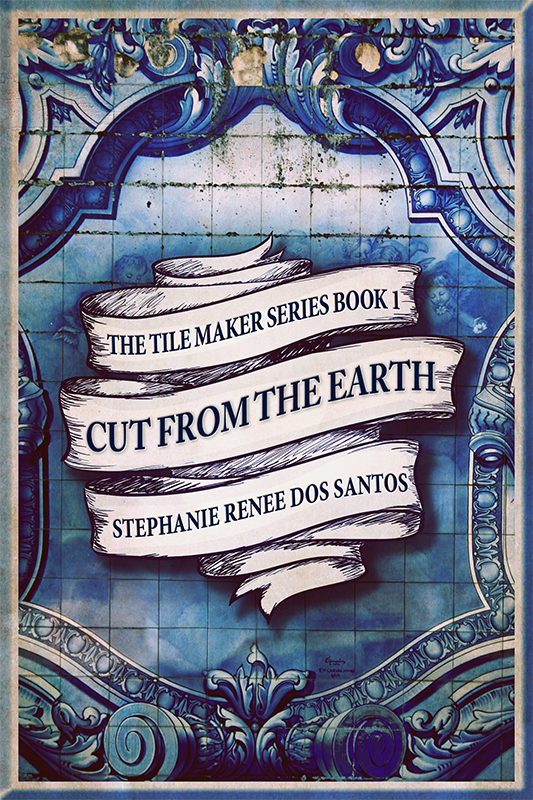
stacks of books artHere is week 3 of the Snippet Sundays installments, after the Mother’s Day hiatus. Visit my latest alluring 6 sentence clip from my novel CUT FROM THE EARTH on my author Facebook page:  byStephanieRenéedosSantos.

Enjoy! Click, read on, leave a comment, and “Like” my writer page!

     READ. PONDER. WONDER.

Leave a Comment

Filed under Uncategorized

Interview with International Bestselling author M.J. Rose

300 MJRBWSome writers’ stories take us by surprise, by storm, author M.J. Rose’sTHE BOOK OF LOST FRAGRANCES, was such a story for me.  I love the things the time-slip mystery thriller brought together:  art, scent, mythology, reincarnation, spirit. I read the novel in two sittings.  And I was so charged up by the story line and psychological characterizations I rushed to posted on M.J. Rose’s Facebook page, letting her know how much I enjoyed the read.  Then I went to her website to investigate more about this author and her works, to find this prolific writer had yet another tantalizing novel within days from being released:  SEDUCTION. Wheels charging in my head, I decided to pursue an interview with this trailblazing novelist: a founding member of International Thriller writers; the first writer to start a marketing company for authors AuthorBuzz.com, and to have her eBook go from being self-published to picked up by a New York mainstream publishing house.

Q: Will you please tell us about the inspiration for the novel THE BOOK OF LOST FRAGRANCES.

Several years ago, I went to a brocante – a flea market  – in Cannes, France. It was a perfect morning to peruse antiques; warm with a little breeze to mingle the scent of fresh flowers with seaside town’s fresh salty air. One table that caught my attention offered an intriguing mix of items laid out as if they were resting on an elegant woman’s vanity.Next to a shagreen jewelry box – opened to reveal strings of pearls, was a pair of fine creamy white kid gloves.  Sunshine glinted off the silver trim of a turquoise cloisonné hair brush set and illuminated the gold lettering on a group of leather-bound books all about mythology.There were also a dozen perfume decanters scattered around. Some were cut crystal with fancy repousee silver caps. Others were intricately sculpted pieces of glass-work  – the kind created by Lalique and Baccarat in the late 19th and early 20th century.

Sadly all the bottles were empty except for one with an inch or so of thick, dark perfume coating the bottom.  It was the least ornate flacon.  A residue of glue was visible to show where a label had once been pasted. It was capped with a green ceramic stopper shaped into a lotus – a flower that I recognized from Ancient Egyptian tomb paintings.

3000 The Book of Lost Fragrances

An engaging suspenseful read! Recommended!

As I daydreamed about the woman who’d owned all these treasures, I picked up the bottle, uncapped it and sniffed. In Remembrance of Things Past, Proust wrote about how the taste and smell of a Madeline returned him to his youth with an immediacy that nothing else ever had. For me it was the scent in that bottle that returned me to a day years before.Suddenly I wasn’t in the square in front of the Hotel De Ville in that French town but was sixteen years old, standing on the hill overlooking Bethesda Fountain in Central Park, talking to a boy who I’d just met. He was telling me about Plato’s theory of soul mates.

And I was falling in love.

The scent in the bottle in the flea market was his scent. He’d worn a cologne – discontinued before he was even born – that he’d found in a house his parents had rented one summer. It had been so long since I’d even smelled it – or even thought of it. But suddenly everything about that meeting – and learning about soul mates- and being sure I’d found one – and the tall boy with sly smile who had sadly long since died– came rushing back in that one inhalation. The Book of Lost Fragrances is a very much a suspense novel weaving history into a tense hunt for an important treasure but the theme for book – an ancient scent that would help people identify their soul mates – came to life that lazy day in the South of France. I bought the bottle from the antique dealer and it sits on a shelf with the rest of my perfume collection. I’ve never opened it again… I don’t want the scent to evaporate any more quickly than nature will insist upon.It’s enough to know that memories lay captured inside and they were strong enough to inspire a novel.

2. The physiological understanding/depiction of your characters is of the highest caliber. How did you achieve this authenticity?

Thank you. I wish I knew – if I did I’d stress less over it. I agonize while writing to make my characters come alive and never  quite feel I’ve done a good enough job. Whatever works comes from truly being inside the story, caring about the characters passionately and seeing them as real.

3. On your website you have this stamp “Indie Next List” can you tell us more about this seal? What it means to be selected by Indie Booksellers?

Thousands of independent booksellers nominate the books that they think are worthy to be chosen. Twenty books are chosen monthly – a #1 book and then 19 others that are all equal. I’ve been so lucky to have my last five books chosen and consider it one of the most important achievements in my career. I grew up in bookstores and these booksellers hand picking my books is just an amazing honor.

4. Will you share with us about your writing process?

I spend months, sometimes years, reading and researching. Then more months making a journal for my main character – filling it with bits of the things that make him or her real to me: Imagine a scrap-book for an imaginary person.  Then I write a first draft straight through – without re-reading, working 3 -4 hours a day, 6 days a week.

Then the hard part is done and I get to do the joyous part . I love re-writing. So I rewrite the book form 2-5 times.

5. Please tells us about your latest release: SEDUCTION. What inspired you to write this story?

300 Seduction

M.J. Rose’s Latest Release!

In 1843, novelist Victor Hugo suffered a devastating loss when his beloved nineteen-year-old daughter drowned. Ten years later, in a desperate effort to contact her, Hugo began participating in hundreds of séances on the Isle of Jersey where he was exiled. In the process, he claimed to have connected with the likes of Plato, Galileo, Shakespeare, Jesus, and most frighteningly, the Devil, known to Hugo as the Shadow of the Sepulcher. Hugo’s transcriptions of these conversations have all been published—or so it was believed.  And that’s where the novel starts.

Jac L’Etoile is a present day mythologist who’s escaped to the Isle of Jersey in the wake of devastating losses of her own hoping to uncover a secret about the island’s Celtic roots. Invited by an old friend, Theo Gaspard, Jac figures the trip will be a welcome distraction from her private life. But Theo, a troubled soul himself, has secret motives and hopes she will help him discover something much different from the Druid ruins that lured her there—Hugo’s lost conversations with the Shadow of the Sepulcher.

My first ghost story.

As for inspiration. A trip Paris and Victor Hugo’s home there inspired me to read Les Miserables. I became obsessed with Fantine. I kept wondering if someone had inspired Hugo to create her? I started reading more and more about him. I read his poetry. Sought out his watercolors and drawings… But it was coming across a description of his belief in reincarnation and his experimenting with séances that made me decide to write about him… and the woman who might have inspired him to create Fantine.

6. I love your novels book jackets: THE BOOK OF LOST FRAGRANCES and SEDUCTION. Who is the jacket designer? They have done a fabulous job by the way!

My publisher’s art department does the cover with a wonderful and talented artist named Alan Dingman – alandingman.com .

Thank you M.J. Rose for the interview!

To Buy M.J. Rose’s latest in print release: SEDUCTION!


Leave a Comment

Filed under Uncategorized

Interview with bestselling author Barbara Kyle & an Exclusive clip from Chapter One of her upcoming next novel!

Barbara_Kyle_Author_PhotoIt is my pleasure to introduce the skilled storyteller  Barbara Kyle, writer of  ”The Thornleigh Saga” series, with whom I am honored to be co-leading the week-long 2014 Writing & Yoga Workshop in Brazil. One of the things I love about Barbara’s books is the quality of the writing: she has an extremely broad descriptive vocabulary, making her novels a sheer pleasure to read.  Her dialogue blows me away in its originality and cleverness, along with her ability to bring the Tudor time period into full life.

Barbara: Thanks for the invitation, Stephanie. It’s a pleasure to reach out to your readers.

 Q: How long have you been a novelist and how did you get started writing?

My first novel was published by Penguin in 1994 so it’s been twenty-one years. Since then I’ve had eight more books published, including three thrillers for Warner Books that I wrote under a male pseudonym (Stephen Kyle) and five historical novels, my Tudor-era “Thornleigh” series, for Kensington.

I started the way most writers do, with short stories. They were pretty awful, full of high-flown language and no point! But I learn quickly, and after a year or so I wrote a short story that won a contest. It wasn’t a exalted contest, just one run by the library association in my county, but it meant the world to me, that affirmation that makes you feel, Yes, I’m a writer.

Barabra's latest release!

Barabra’s latest release!

Q: Would you please share with us information about your latest release: BLOOD BETWEEN QUEENS?

With pleasure. BLOOD BETWEEN QUEENS is my fifth “Thornleigh” novel,  a saga that follows the rise of a middle-class English family through three turbulent Tudor reigns.

The story begins when Mary Queen of Scots flees to England to escape her enemies and throws herself on the mercy of her cousin, Queen Elizabeth. Mary, however, has set her sights on the Elizabeth’s throne, and Elizabeth enlists her most trusted subjects to protect it. Justine Thornleigh is delighting in the thrill of Elizabeth’s visit to her family’s estate when the festivities are cut short by Mary’s arrival. To Justine’s surprise, the Thornleighs appoint her to serve as a spy in Mary’s court. But Justine comes to sympathize with Mary, and when Elizabeth holds Mary under house arrest and launches an inquiry into the accusations that she murdered her husband, the crisis splits the Thornleigh family apart.

Like many history lovers I’m fascinated by the deadly rivalry between the two cousin-queens. When Mary arrived in England she could never have suspected that Elizabeth would keep her under house arrest for the next nineteen years, and finally, after Mary’s incessant plotting for Elizabeth’s crown, execute her. For over four hundred years this story has enthralled the world. I have learned that Mary generates high emotions in people – they either love her or hate her. As for my own opinion, I don’t want to give any spoilers so I’ll just say that BLOOD BETWEEN QUEENS takes no prisoners!

Q: I recently read a blog interview with you where you talked about working with “Hinges in History” would you explain to us this working philosophy?

The “hinges of history” is a powerful image, isn’t it? A swinging door: an opening, a closing. What I mean by the phrase is the crucial turning points, the pivotal events in history. Often such events are driven by larger-than-life personalities like Henry VIII and his daughter Elizabeth I. Their actions had a tremendous impact on the people of England and the world. One example is Henry’s extraordinary creation of a national church just so he could divorce his first wife and marry Anne Boleyn. Another is Elizabeth’s decision to put her cousin Mary Queen of Scots under house arrest. I set my “Thornleigh” novels during these pivotal events to test my characters’ mettle as they’re forced to make hard choices about loyalty, duty, family, and love.

Q: Not only are you a successful novelist, you also lead “Masters Writing Workshops” will you share with us about why you choose to help others with the craft of writing?

I really enjoy helping emerging writers. It’s such a pleasure to see a writer have a “light bulb” moment at hearing the principles of writing that I teach. When I started writing years ago I learned a lot from mentors, and I’m happy now to pass along what I’ve learned to others. It’s part of the artistic tradition, whether in writing, painting, music or dance – we all learn from practitioners who’ve had success in their field.

Q: And will you tell us a bit about your workshops and the success of other writers that have taken them?

I give workshops for many writers groups and writers conferences, and I offer my own Master Class twice a year in my home city of Toronto. The Master Class is a full weekend workshop limited to ten people, and during it each writer brings the first thirty pages of their work-in-progress – whether a novel, memoir, or narrative non-fiction – and we critique it in a friendly, supportive atmosphere. By Kafka Comes to Americathe way, writers can also subscribe to my online series of video workshops “Writing Fiction That Sells” – your readers can watch an excerpt of it on my website www.BarbaraKyle.com. Also, I’m looking forward to April 2014 when you and I, Stephanie, will run a week-long combination writing plus yoga workshop in Brazil. That’s going to be a treat!

As for the success of writers who’ve learned from me, many have gone on to have their books published. One that I’m very proud of is KAFKA COMES TO AMERICA, a memoir by Steven T. Wax, a U.S. federal Public Defender for the District of Oregon. It received a starred review in Publishers Weekly.

Q: Can you reveal a snippet of your next novel?

 I’d be glad to. I’ve just finished writing it and have sent the manuscript to my publisher. It’s Book #6 in my “Thornleigh” saga. (By the way, each book in the series stands alone; readers need not have read the previous ones to enjoy the story.) This book brings back a young Scottish woman, Fenella Doorn, who was a minor character in THE QUEEN’S GAMBLE. Her story in that novel was so intriguing I gave her the “starring” role in this new one, set ten years later, in 1572. Here’s how Chapter One starts:

Fenella Doorn watched the unfamiliar wreck of a ship ghosting into her bay. Crippled by cannon fire, she thought. What else could do such damage? The foremast was blown away, as well as half the mainmast where a jury rig clung to the jagged stump, and shot holes tattered the sails on the mizzen. And yet, to Fenella’s experienced eye the vessel had an air of defiance. Demi-cannons hulked in the shadowed gun ports. This ship was a fighter, battered but not beaten. With fight still in her, was she friend or foe?

Or faux friend. Fenella kept her anxious gaze fixed on the vessel as she started down the footpath from the cliff overlooking La Coupée Bay. Old Johan followed her, scuffling to keep up. The English Isle of Sark was the smallest of the four Channel Islands, just a mile long and scarcely a mile and a half wide, so from the cliff top Fenella could see much of the surrounding sea. The few hundred farmers and fishermen who called the island home were never far from the sound of waves smacking the forty miles of rocky coast. Fenella, born a Scot and bred from generations of fishermen, was as familiar with the pulse of the sea as with her own heartbeat.

Delicious! Thank you Barbara for the interview and sharing with us this clip, looking forward to the novel’s release!

 To Buy the Kindle Version of Barbara’s latest release:

Blood Between Queens!

Leave a Comment

Filed under Uncategorized

Author Interview with Jeanne MacKin

The Sweet By and By

The Sweet By and By

For the next month or so, I will be posting author interviews at least once a week. Today, I would like to introduce writer, Jeanne MacKin, author to multiple books in different genres and a speaker at the upcoming Historical Novel Society Conference in St.Petersburg, FL June 21-23, 2013.  I am attending the HNS Writers Conference and I am thrilled to be going, there’s still time to sign up if you haven’t already done so!

Today’s highlight is Jeanne’s  historical novel THE SWEET BY AND BY. I am intrigued by its subject matter and story line: 

“Is death the end? Do ghosts exist? What is faith? Mackin examines these and related issues in a totally nonmacabre manner, telling in tandem two stories that take place about 150 years apart. In 1998, journalist Helen West, while mourning the death of her married lover, Jude, researches the strange life of Maggie Fox, called the Founder of American Spiritualism. Maggie became famous after 1848 when, with her sisters’ help, she developed a large following eager to contact the spirits of dearly departed loved ones. Helen becomes involved with her subject and with the concept of the possibility of returning spirits. Can they comfort those they love? Can one enter a loving relationship with another before finding closure with the deceased, previous loved one? This well-written tale is sympathetically conceived and entertainingly presented. Recommended. DEllen R. Cohen, Rockville, MD Copyright 2001 Reed Business Information, Inc” – Goodreads Review

Q:  What got you first interested in historical fiction?

Probably the stories my family used to tell, about my father getting stuck on the train tracks one Christmas eve, how my grandmother was supposed to be a descendant of Lafayette and my great-grandfather the son of a freed slave; how my brother ran away to the circus and was almost stepped on by an elephant.  The stories always moved back in time and I fell truly in love with that movement into a blurry time before I existed.  The stories left me wanting to know more, and to create my own stories.

Q:  Do you have an anecdote about a reading or fan interaction you’d like to share?  

At my very first reading for my first novel, The Frenchwoman,  when my knees were knocking so badly I actually tipped over a large floor-standing vase of flowers, I ended the question and answer session by saying we could never really travel back to the eighteenth century. Someone in the audience raised his hand and said, “Oh yes, we can.  Your chapter took me there.” I was so flattered, because that’s exactly what I want  my fiction to do, to make people feel as if they are actually there, inhabiting the story along with the characters.

Q:  What are your favorite reads? Favorite movies? Dominating influences?

I read the novels of Jean Rhys over and over, especially Wide Sargasso Sea. That first paragraph, when she creates an entire world with so few worlds, just stuns me every time. And when I was a kid, I read and reread everything by Anya Seton and of course Daphne du Maurier. Fabulous, fabulous writers.

Q:  Is there a writer, living or deceased, you would like to meet?

I have always wished I could have partied with Ben Franklin.  He has been kind of sainted by history, along with the other fathers of the nation.  But he had a great sense of humor and fun, was very sociable and enjoyed good wines and wonderful meals.  I think he would have been the perfect dinner party partner, full of flattery, slightly tipsy, and making naughty jokes under his breath.

Q:  What book was the most fun for you to write?

The must fun was the Louisa mysteries, Louisa and the Missing Heiress, The Country Bachelor, and the Crystal Gazer.  To write them I had to work with Louisa’s fascinating psychology, so that the story lines contained events that would have mattered to her – issues about slavery, women’s rights, poverty – but also included some her light-heartedness and humor.   She also had a taste for the gothic and wrote some pretty racy stuff anonymously and under nom-de-plumes so it was interesting to play with that a bit as well.


Leave a Comment

Filed under Uncategorized

Snippet Sundays

painting bookWelcome to week 2 of “Snippet Sundays”! Visit my latest enticing 6 sentence clip from my novel CUT FROM THE EARTH on my author Facebook page:  byStephanieRenéedosSantos.

Enjoy! Click, read on, leave a comment, and “Like” my writer page!


READ. READ. READ.

Leave a Comment

Filed under Uncategorized

New Release by bestselling author Barbara Kyle: BLOOD BETWEEN QUEENS

Barabra's latest release!

Barbara’s latest release!

Barbara’s writing is like entering the magic of a theatrical stage, vivid and colorful, with engaging dialogue and characters. This is the fifth book of the Thornleigh Tudor series, a story of a  middle-class English family’s rise through the tumultuous Tudor reign. Enter the saga where people are forced to make hard decisions about loyalty, allegiance, duty, family and love.

“Following her perilous fall from a throne she’d scarcely owned to begin with, Mary, Queen of Scots, has fled to England, hoping her cousin, Queen Elizabeth, will grant her asylum. But now Mary has her sights on the English crown, and Elizabeth enlists her most trusted subjects to protect it.

Justine Thornleigh is delighting in the thrill of Queen Elizabeth’s visit to her family’s estate when the festivities are cut short by Mary’s arrival. To Justine’s surprise, the Thornleighs appoint her to serve as a spy in Mary’s court. But bearing the guise of a lady-in-waiting is not Justine’s only secret. The weight of her task is doubled by fears of revealing to her fiancé that she is in truth the daughter of his family’s greatest enemy.

Duty-bound, Justine must sacrifice love as she navigates a deadly labyrinth of betrayal that could lead to the end of Elizabeth’s fledgling reign…”

Praise for Blood Between Queens:

“A masterful commingling of fact and fiction, effortlessly transporting readers to the perils and passions of Tudor England. Gaspworthy treachery and the poignant sweetness of steadfast love make this a book of quickly and eagerly turned pages. Justine Thornleigh is a heroine to root for and to love.” - Sandra Byrd, bestselling author of Roses Have Thorns
A reader’s review on Goodreads“Kyle’s finest…an experience of vivid literary color.”

Available for purchase starting today!

Order the in print copy of Blood Between Queens:

Leave a Comment

Filed under Uncategorized

Snippet Sundays

coffee and manuscriptVisit today the debut of the first lines from my book! Welcome to “Snippet Sundays” where I and other writers are posting enticing 6 sentence clips from our novels on our author Facebook pages.  This will be an ongoing weekly post on my Facebook page:  byStephanieRenéedosSantos.   I will post in chronological order for the next 6 weeks, from my forthcoming historical novel:  CUT FROM THE EARTH.

Click, read on, enjoy, leave a comment, and “Like” my writer page!

Leave a Comment

Filed under Uncategorized

My Favorite 10 Historical Novels of 2012

I have been meaning to get this up for months now!  Here are my favorites:

  1. Without a doubt this was my beloved of 2012:In Shadow of the Banyan by Vaddey Ratner – I loved the poetic writing, the eye-witness fictional retelling of  the tragic and triumphant story of Cambodia and her people. This novel moved and touched my soul.In the Shadow of the Banyan cover 2
  2. The Josephine Bonaparte Trilogy: The Many Lives and Secret Sorrows of Josephine B., Tales of Passion, Tales of Woe, and The Last Great Dance on Earth by Sandra Gulland.  An epic series of the life story of Josephine B.  who became the wife of Napoleon.  The writing is economical; the story captivating.
  3. Claude & Camille by Stephanie Cowell – A story of art, of love.
  4. Leaving Van Gogh by Carol Wallace - The artist’s plight.
  5. The Dovekeepers by Alice Hoffman – A powerhouse of prose, a gift.
  6. The Hummingbirds Daughter by Luis Alberto Urrea – A tale of a gifted Mexican healer and the cost to heal.
  7. In the Company of the Courtesan by Sarah Durant – Beautiful metaphors and similes.
  8. Water for Elephants by Sara Gruen – Playful

Currently Reading:  The King’s Agent by Donna Russo Morin

To Read List: The acclaimed “Thornleigh” novels Blood Between Queens, The Queen’s Gamble, The Queen’s Captive, The King’s Daughter and The Queen’s Lady by Barbara Kyle; The Crown and The Chalice by Nancy Bilyeau; Illuminations by Mary Sharratt; and Shadow on the Crown  by Patricia Bracewell.

Leave a Comment

Filed under Uncategorized

“Sea Murals” debuts in American Athenaeum

FrontPorchCoverMy flash fiction work “Sea Murals” will print in the “Front Porch”  issue of literary journal American Athenaeum, in April, 2013.

It is a quirky yarn about doing things differently than others, living crazy and eccentric ideas, using art to create positive life results in a traditional Brazilian fishing village.

American Athenaeum is a cultural magazine that features fiction, poetry, essays, opinion, author book reviews, and other literary contributions. Each journal explores the world of words like a patron explores a museum—by offering a view of the past, right up until the present. We consider this journal to be a museum of artistic endeavors, filled with cultural appreciation and stories that not only teach, but demonstrate the frailty of the human condition.”  - Writers & Poets

To buy this issue, and for more information about  American Athenaeum visit: 

http://swordandsagapress.com/American-Athenaeum.php


2 Comments

Filed under Uncategorized